Beginner surf in Taghazout: choose the wave that helps, not the name that sells
Beginners do not need the most famous break. They need the right water, the right coach, enough rest, and a plan that changes when wind or swell changes.
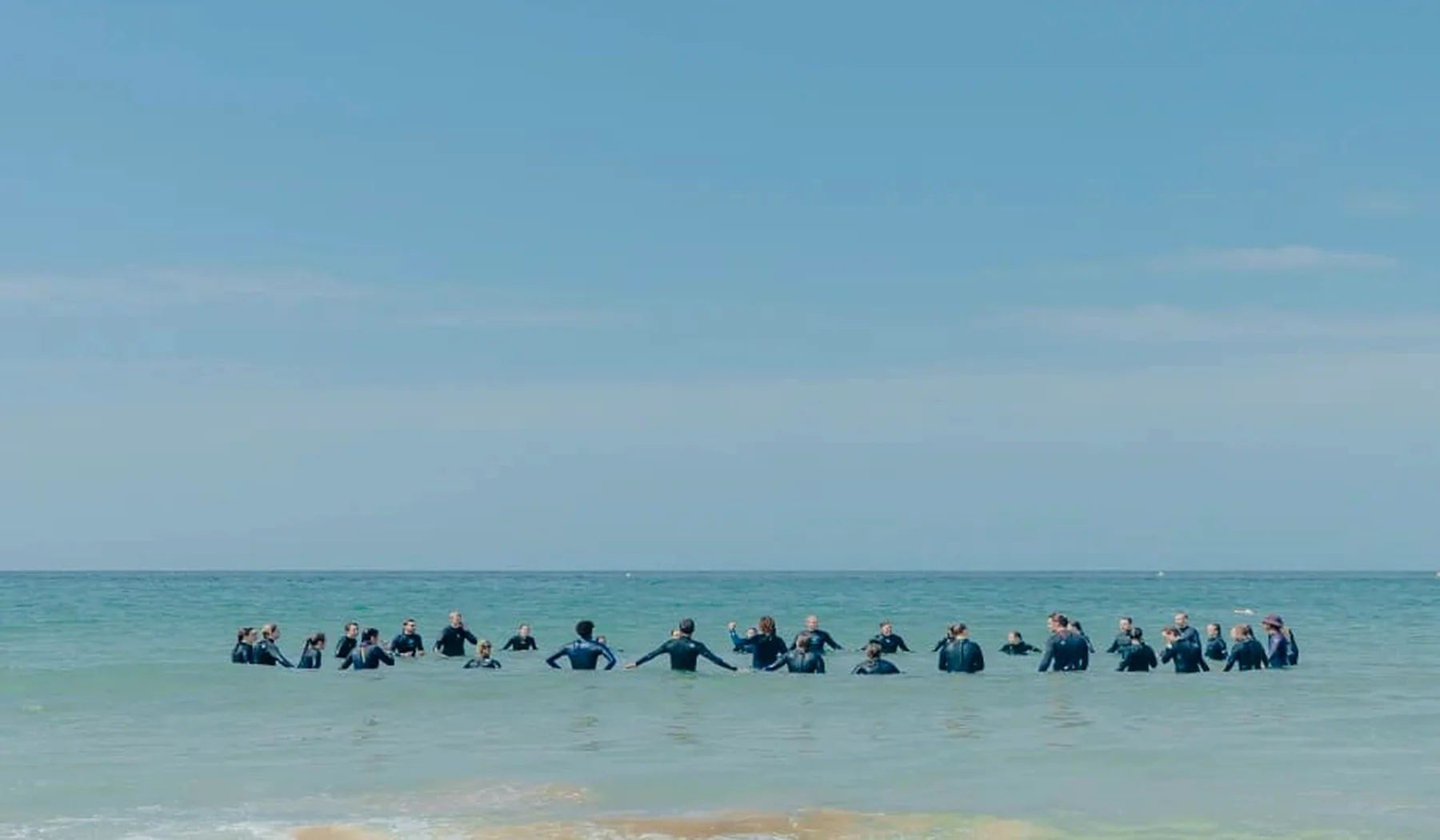
Use this guide as a practical next step
Check conditions, choose the right stay base, then move into a reviewed stay request when the plan is clear.
Reviewed quote first · Forecast before booking · WhatsApp before payment
Ready to turn this into a stay?
Keep the research useful: choose the stay location, check the forecast, then send a reviewed booking request.
Where a beginner should actually be
The famous waves here — Anchor, Killer, Mysteries — are boulder points that break in a crowd and punish mistakes on the exit. None of them is where you learn. The beginner coast is the stretch south of Taghazout: Devil's Rock and Imourane, the beach in front of Tamraght, Crocro on a small day, and, further south, Anza and the sheltered Agadir city beach. All are sand entries with room to spread out and waves that break and then reform, which is exactly what a first week needs. Book accommodation with that in mind and the whole trip gets easier.
What week one actually looks like
Most people who have never surfed stand up on whitewater somewhere between the third and fifth session, not the first. A realistic week is five sessions of ninety minutes to two hours, with a rest day in the middle, because beginner surfing is almost entirely paddling and your shoulders and ribs will tell you so by day three. The progression is: prone rides and board control, then the pop-up on whitewater, then trimming along a reformed wave, then, if the week is going well, a first unbroken wave. Anyone promising green waves on day one is selling something.
Choosing a school and a coach
Standards vary considerably. The things that matter are the ratio (six students to one coach is fine; twelve is a queue), whether the coach is in the water with you or on the beach with a whistle, whether the gear fits, and whether they will change the beach when the forecast says to. A two-hour group lesson including board and wetsuit runs 250–350 MAD; a private is 500–700 and is genuinely worth it for one or two sessions if you are nervous or short of time. Ask what happens on a day the surf is too big — a good school moves the lesson, a bad one runs it anyway.
Boards: soft-tops and volume
Your first three or four sessions should be on a soft-top, somewhere around 8 feet, with a lot of volume. It floats, it forgives a bad pop-up, and it will not open your eyebrow when it hits you — which it will. The urge to move onto a hard board quickly is normal and usually premature: the right time is when you are consistently catching and standing on whitewater and starting to angle along the wave. Then move to a large hard board, still high volume, not a shortboard. Almost every beginner who plateaus here did it by moving down in volume two boards too early.
Reading the day before you go down
The habit worth building in week one is checking the forecast the evening before and again over breakfast. Three numbers matter: swell height, wind speed and direction, and the tide. For a beginner, you want swell under about 1.2 m, wind light or under 15 knots, and the tide somewhere between low and mid. If the swell is 2 m and the wind is 25 knots onshore, that is not a lesson, it is an ocean-safety lecture with equipment. Learning to make that call yourself is more valuable in the long run than any individual session.
Water safety in plain terms
Rip currents exist on every beach here, and on a beach break they are usually visible as a darker, calmer channel with less broken water. If you are caught in one, do not paddle against it: paddle across it, parallel to the beach, until you are out of the pull. Keep hold of your board, it floats. Stay within sight of your coach or your group, look behind you before you stand up in shallow water, and never surf alone as a beginner. There are no lifeguards on most of the beaches north of Agadir, which is the main practical difference from a European beach holiday.
Making the week actually work
The two changes that improve a beginner week most are unglamorous. First, stay in Tamraght or Aourir rather than Taghazout village: you are walking distance from the beginner beaches instead of driving twenty minutes each way twice a day. Second, do not book activities on your surf days. The combination of two hours of paddling, four hours in the sun and a quad-bike excursion produces someone who is too tired to surf on day four. Surf, eat, sleep, one local thing on the rest day. That rhythm is why people come home able to surf rather than merely sunburnt.
Local planning notes
- Stay in Tamraght or Aourir for a first surf week — you walk to the beginner beaches instead of driving.
- Ask a school what they do when the surf is too big; the answer tells you everything.
- There are no lifeguards on most beaches north of Agadir.
- Stay on a soft-top for the first three or four sessions, whatever your ego says.
Common mistakes to avoid
- Booking Taghazout village because of the famous waves, then commuting to every lesson.
- Moving to a hard low-volume board after two sessions.
- Filling surf days with excursions and arriving at day four too tired to paddle.
- Expecting to ride unbroken waves on day one.
FAQ
Where should a complete beginner surf near Taghazout?
Devil's Rock / Imourane and the beach in front of Tamraght are the standard choices: sand entry, wide beach, waves that reform inside. On a big day, the sheltered Agadir city beach is the safer alternative.
How much is a surf lesson?
Roughly 250–350 MAD for a two-hour group session including board and wetsuit, or 500–700 MAD for a private lesson. Weekly packages that bundle five sessions usually work out cheaper.
How long before I can stand up?
Most people stand on whitewater between the third and fifth session. Riding an unbroken wave typically comes later in the first week or on a second trip.
Is it safe to learn here?
Yes, on the right beaches with a school. Most beaches north of Agadir have no lifeguard, so the school and your own judgement about size and wind are the safety system.